


Pacific Clipper Saga
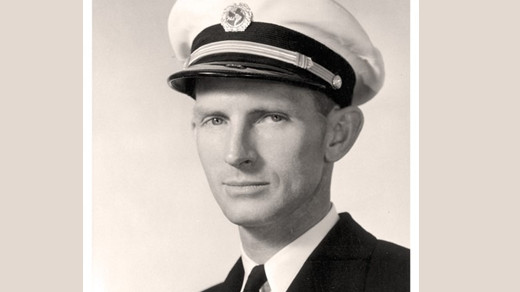
Unsung Hero Pan Am Captain Robert Ford


In 1939, Pan American Airlines received the Boeing 314 Clipper, designed to carry more passengers over longer distances. Referred to as flying boats, they were designed for luxury. The new cross-ocean air travel was for the rich. A one-way trip from San Francisco to Hong Kong cost $760 in 1939, the equivalent of roughly $17,000 today.
Two years later, the Pacific Clipper flying boat went into service. On December 2, 1941, the plane, carrying 12 passengers and 10 crew members led by Pan Am Captain Robert Ford, left San Francisco on a scheduled route to Auckland, New Zealand.
Their route home was now blocked by the Japanese. Ford silenced the radio, posted watches in the navigator’s blister in the roof of the Pacific Clipper, altered course by fifty miles, and got out his .38-caliber revolver. Two hours later, he landed normally in Auckland.
Ford went directly to the U.S. consulate to wait for instructions. During the next seven days, coded messages piled up while decoding clerks were overwhelmed. Ford realized the same bottleneck was happening in consulates around the world.
Captain Ford understood how valuable his Pacific Clipper had suddenly become. Only twelve existed, and they were among the only long-range, heavy-payload aircraft in the world.
Ford would have to plot his own route, choose unknown harbors, and find fuel wherever he could. It would become the first round-the-world flight by a commercial plane.
Bill Mullahey, attached to the Pan Am New Zealand station, gathered every map, chart, and even schoolboy geography book he could find. Together, he and Ford plotted the possible route home.
Ford first returned to New Caledonia to pick up Pan Am personnel and their families. He gave them one hour to pack one small bag, loaded all the fuel he could carry, and took off again.
The journey was dangerous from the beginning. At times, the flying boat passed over land instead of water, meaning a safe landing would be impossible if something went wrong.
In Darwin, Australia, war hysteria filled the city. Women were being evacuated, air raids were feared, and fighting had broken out in the streets. During a lightning storm, the Pacific Clipper was refueled and sent onward in total radio silence.
The world was tense, and few people along the route had ever seen a Pacific Clipper flying boat. Ford worried about nervous pilots and itchy trigger fingers, but he had no choice but to keep moving.
In Java, Ford needed 100-octane aviation fuel, but none was available. He was forced to use automobile gasoline. The engines began to pop, spit, knock, and miss. With no charts and only latitude and longitude, he flew low, searching for lights and land.
At one point, the Pacific Clipper flew directly over a Japanese submarine. As the submarine crew ran for their deck gun, Ford applied full power and climbed toward the clouds. Despite the struggling engines, the aircraft disappeared into cover and escaped.
On Christmas Eve, overloaded and still running poorly, the No. 3 engine blew. Oil poured over the wing. Ford turned the aircraft around and landed. Flight engineers Swede Rothe and Jocko Parish discovered broken studs holding the engine cylinder. Parish borrowed a lathe and steel from a British warship and made the special tool needed for repairs.
Repairs took all of Christmas Eve and Christmas Day. On December 26, Ford lifted the flying boat back into the air using automobile gasoline.
They continued across India, the Persian Gulf, the Arabian Desert, the Red Sea, the Nile, and into Africa. With engines sputtering and parts failing, Ford pressed on toward the Congo, then west toward South America.
In Brazil, the authorities ordered the entire crew off the aircraft while it was fumigated for yellow fever. When the crew returned, much of their money and personal papers had been stolen. There was little they could do, so they flew on to Trinidad.
In Trinidad, with New York only sixteen hours away, the exhausted crew finally slept. Most slept around the clock.
“Pacific Clipper, inbound from Auckland, New Zealand, Captain Ford reporting. Due arrive Pan American Marine Terminal LaGuardia seven minutes.”
At six minutes to six on the bitter-cold morning of January 6, 1942, the control officer at New York’s LaGuardia Field heard those words over the loudspeaker. They announced one of the epic achievements in aviation history.
Sent in by Duane Myra of Jacksonville, Florida.